This content is for informational purposes only and does not constitute legal advice or create an attorney-client relationship. We are a debt relief agency. We help people file for bankruptcy relief under the Bankruptcy Code.
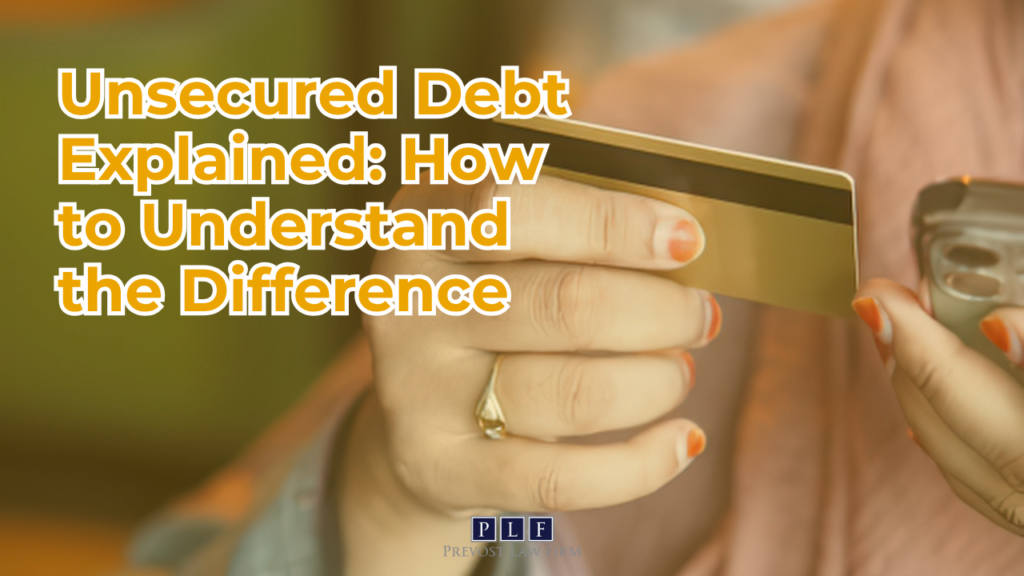
Unsecured debt might be costing you significantly more than you realize. When you take on debt without providing collateral, lenders typically charge higher interest rates compared to secured options. Millions of Americans carry significant credit card debt, making unsecured debt an important part of many households’ financial picture.
What exactly is unsecured debt? Simply put, it refers to loans that aren’t backed by any collateral. Also known as signature debt or personal loans, these financial obligations rely solely on your promise to repay. Because lenders have limited protection against default, they generally require higher interest rates to offset their risk. This creates a key difference between secured and unsecured debt that directly impacts your financial situation.
If you’re considering your borrowing options or trying to understand your current debt structure, knowing the different types of unsecured debt is essential. From credit cards to medical bills, these debts come with unique characteristics and consequences.
Additionally, understanding what happens when payments fall behind is crucial. Because unsecured creditors have no collateral securing the debt, they cannot simply repossess your property the way a car lender or mortgage company can. However, if you stop paying and a creditor obtains a court judgment against you, they gain access to other legal tools—including placing a lien on nonexempt real property you own, levying funds in your bank account, or asking the court to order you to turn over nonexempt assets. Texas exemption laws protect certain property from these remedies, but not all assets are shielded.

What is Unsecured Debt?
Understanding the core concept of unsecured debt begins with recognizing what’s missing – collateral. Fundamentally, unsecured debt refers to any loan or financial obligation that is not backed by specific assets. Instead of property securing the loan, these financial arrangements rely primarily on the borrower’s promise to repay.
Definition and key characteristics
Unsecured debt stands apart through several distinctive features. First of all, these loans don’t require you to pledge any property as security. Common examples of unsecured debt include credit cards, personal loans, medical bills, student loans, and utility bills. Moreover, these financial obligations typically carry higher interest than secured loans, reflecting their unique risk profile. The approval process for unsecured loans focuses heavily on your creditworthiness, including credit history, income stability, and overall debt-to-income ratio.
What does unsecured debt mean for borrowers?
For borrowers, unsecured debt offers both advantages and considerations. Because unsecured debt is not backed by collateral, a creditor cannot simply repossess a specific asset when you miss a payment. However, if the creditor obtains a judgment, it may be able to pursue certain nonexempt property or funds through legal collection procedures.
Furthermore, unsecured loans often feature more straightforward application processes, making them accessible options for various financial needs. However, these conveniences come with trade-offs. The absence of collateral typically results in stricter lending criteria, higher interest rates, and potentially lower borrowing limits.
Why lenders consider it high risk
From the lender’s perspective, unsecured loans represent substantial risk. Essentially, if you default on an unsecured debt, the lender has no specific asset to claim. This creates a fundamental vulnerability – the creditor faces a greater risk of loss if the borrower defaults because there is no specific collateral securing repayment. To protect themselves, lenders employ multiple risk management strategies. They typically charge higher interest rates, require better credit scores, and may impose stricter borrowing terms. Despite these precautions, should a default occur, lenders must pursue alternative recovery methods, including debt collection, credit bureau reporting, legal action, or potentially selling the debt to collection agencies.
Secured vs Unsecured Debt: Key Differences
The key difference between secured and unsecured debt lies in the presence or absence of collateral. This fundamental distinction affects everything from approval requirements to what happens if you miss payments.
Collateral requirements
Secured loans require you to pledge a valuable asset as collateral that the lender can claim if you fail to repay. For mortgages, your home serves as collateral; for auto loans, your vehicle backs the debt. Consequently, the lender maintains a legal claim or “lien” on that property until you’ve fully paid off the loan. In contrast, unsecured debt relies solely on your promise to repay, with no specific assets attached.
Interest rate implications
Due to the reduced lender’s risk with secured loans, they typically offer lower interest rates than their unsecured counterparts. Meanwhile, unsecured loans often command higher costs precisely because lenders have nothing to fall back on if you default. Your credit history plays a much larger role in determining rates for unsecured debt.
Consequences of default
Should you default on a secured loan, the lender can seize and sell the pledged collateral to recover their losses. Yet the repercussions don’t end there—your credit report will still suffer negative impacts. With unsecured debt, creditors may pursue collection, report defaults to credit bureaus, or file a lawsuit. In Texas, current wages generally cannot be garnished for ordinary consumer debts, although a judgment creditor may have other remedies against nonexempt property or funds.
Examples of secured vs unsecured debt
Common types of secured debt include:
- Mortgages and home equity loans
- Auto loans and vehicle financing
- Secured credit cards (requiring a cash deposit)
Whereas unsecured debt typically encompasses:
- Credit card debt and personal lines of credit
- Medical bills and student loans
- Utility bills and certain retail contracts
Types and Examples of Unsecured Debt
Unsecured debt comes in various forms, each with distinct characteristics and implications for your financial health. Let’s examine the most common types you’re likely to encounter in your financial journey.
Credit card debt
Credit card debt represents one of the most prevalent forms of unsecured liability. As revolving credit, it allows you to make purchases with deferred payments over time. While offering flexibility, credit cards often carry some of the highest interest rates among all debt types. Your credit card utilization directly impacts your credit score. Accordingly, this form of borrowing typically accounts for a significant portion of outstanding debt on most borrowers’ credit reports.
Medical bills
Medical bills stand firmly as unsecured debt, placing them in the same category as credit cards. Unfortunately, many debtors face bankruptcy following an injury or illness that prevented them from working. Given that medical debt is unsecured, healthcare providers cannot reclaim the services they provided if you don’t pay.
In 2024, the Consumer Financial Protection Bureau finalized a rule that would have removed medical-debt information from consumer credit reports. However, in July 2025, a federal court in Texas vacated the rule, finding it exceeded the agency’s statutory authority. As a result, medical debts may still appear on credit reports and be considered by creditors in lending decisions. The legal landscape in this area continues to evolve, so consumers should seek current guidance about how medical bills may affect their credit.
Personal loans
Personal loans offer versatile financing without collateral requirements. These loans can fund various needs. They can cover anything from home repairs to vacations. Primarily, personal loans feature fixed interest rates and set repayment periods, making monthly budgeting straightforward. Those with excellent credit often qualify for lower rates than they would with credit cards.
Student loans
Both federal and private student loans qualify as unsecured debt. Notably, no collateral is required when borrowing for education. Nonetheless, student loans differ from other unsecured debts in significant ways. They are generally more difficult to discharge through bankruptcy than many other unsecured debts.
Utility and cellphone bills
Unpaid utility and cellphone bills represent another form of unsecured debt. While service providers may disconnect your services for non-payment, they cannot claim any of your assets or belongings. These debts alone rarely push someone into filing bankruptcy, yet they can be discharged through that process.
Business credit lines
Business credit lines provide businesses with access to funds for operating expenses and unexpected costs. Some business credit lines are unsecured, meaning they do not require specific collateral, although eligibility requirements, credit limits, rates, and terms vary by lender.
What Happens If You Don’t Pay Unsecured Debt
Failing to pay your unsecured debt triggers a predictable chain of events that grows increasingly serious over time. Understanding these consequences helps you make informed decisions about your financial situation.
Late fees and credit score impact
Missing payments may result in late fees, higher interest rates, and negative credit reporting. A payment that becomes sufficiently delinquent may be reported to the credit bureaus and affect your credit score. The extent of the impact depends on your overall credit profile and payment history.
Debt collection and legal action
After an account is significantly past due—often around 180 days—the original creditor typically “charges off” the account, which is an accounting classification, not a forgiveness of the debt. The creditor may then attempt collection through an in-house department, place the account with a collection agency, or sell the debt to a third-party buyer. Whether a creditor or collector files a lawsuit depends on many factors, including the amount owed and the applicable statute of limitations. In Texas, the limitations period for most debt-collection lawsuits is four years.
Wage garnishment and court judgments
In Texas, your current wages generally cannot be garnished by a judgment creditor. The Texas Constitution protects wages from garnishment except in limited circumstances, including court-ordered child support, certain tax debts, and federally guaranteed student loans. However, once a creditor obtains a court judgment, they may pursue other collection methods—including placing liens on nonexempt real property, levying funds in your bank account, or seeking a court-ordered turnover of nonexempt assets.
Bankruptcy and debt discharge
Bankruptcy may offer relief from overwhelming unsecured debt. Chapter 7 bankruptcy may allow you to eliminate many types of unsecured debt, including credit card balances, medical bills, and personal loans. However, important exceptions exist. Certain debts generally cannot be discharged, including most student loans, recent tax obligations, debts arising from fraud, domestic-support obligations, and criminal fines or restitution. Additionally, the court may deny discharge entirely in cases involving concealment of assets or other improper conduct.
Chapter 13 bankruptcy allows individuals with regular income to propose a court-supervised repayment plan, typically lasting three to five years. However, Chapter 13 has eligibility requirements, including debt limits, and the plan must be approved by the court. Not every plan is confirmed, and completing the plan requires consistent payments over the full plan period. At the end of a successful plan, remaining qualifying unsecured debts may be discharged, although some debts remain nondischargeable even in Chapter 13.
A bankruptcy filing may appear on your credit report for seven to ten years, but the actual impact on your credit score and future borrowing ability varies considerably. Many people begin rebuilding credit before the bankruptcy notation is removed. A bankruptcy attorney can help you understand which debts may be eligible for discharge and how bankruptcy could affect your circumstances.
Conclusion
Understanding the nature of unsecured debt remains essential for managing your financial situation effectively. Unlike secured loans backed by collateral, unsecured loans carry higher interest rates because lenders face greater risk when extending credit without specific assets as security. Credit card debt, medical bills, and personal loans all fall into this category and therefore typically come with less favorable terms than secured options like auto loans or home equity loans.
When financial difficulties arise, unsecured debts follow a predictable pattern of consequences. First, late fees accumulate, and your credit report reflects missed payments. Afterward, debt collectors may begin contacting you, and continued non-payment could lead to legal action or even a court judgment. Therefore, addressing payment problems early through debt consolidation, debt settlement, or seeking financial advice might help you avoid these escalating consequences.
The key difference between secured and unsecured debt ultimately affects your financial goals and options. While unsecured debt does not place specific collateral directly at risk, a creditor that obtains a judgment may have legal remedies against certain nonexempt property or funds. Conversely, secured loans like car loans or mortgages present lower rates but put valuable assets at risk if you default.
Your financial stability depends on balancing different types of debt appropriately. Despite their higher interest rates, unsecured personal loans and lines of credit serve as useful tools when used responsibly. Undoubtedly, understanding the full implications of each borrowing option empowers you to make informed decisions aligned with your long-term financial objectives and potentially avoid the debt traps that have affected millions of Americans.
FAQs
What is the main difference between secured and unsecured debt?
The primary difference is collateral. Secured debt requires an asset as collateral, while unsecured debt relies solely on the borrower’s promise to repay without any specific asset backing.
Why do unsecured loans typically have higher interest rates?
Unsecured loans generally have higher interest rates because they pose a greater risk to lenders. Without collateral, lenders have no asset to claim if the borrower defaults, so they charge higher rates to offset this risk.
What are some common examples of unsecured debt?
Common examples of unsecured debt include credit card balances, personal loans, medical bills, student loans, and utility bills. These types of debt don’t require any collateral.
What happens if you don’t pay your unsecured debt?
If you don’t pay unsecured debt, you may face late fees, credit-score damage, collection efforts, and potentially a lawsuit. In Texas, current wages generally cannot be garnished for ordinary consumer debts, although judgment creditors may have other remedies against nonexempt property or funds.
Can unsecured debt be discharged through bankruptcy?
Most unsecured debts can be discharged through bankruptcy, particularly in Chapter 7 bankruptcy. However, some types of unsecured debt, like student loans, are generally much more difficult to discharge. A borrower typically must prove “undue hardship” through a separate court proceeding—a demanding legal standard. Federal guidance on student-loan discharge continues to develop, so consult a bankruptcy attorney about your specific situation.
Ready to Explore Your Debt Relief Options?
To learn more about how bankruptcy may help you and what options may be available, book a no-cost debt relief consultation here.
We’ll review your situation and help you understand the options that may fit your circumstances. No pressure.
This content is for informational purposes only and does not constitute legal advice or create an attorney-client relationship. We are a debt relief agency. We help people file for bankruptcy relief under the Bankruptcy Code.